

What follows is a detailed analysis of the root cause of a vulnerability we call CVE-2015-X, as well as a step-by-step explanation of how to trigger it. For more on Flash vulnerabilities, we also invite you to read "The Latest UAF Vulnerabilities in Exploit Kits," published May 28 by Tao Yan.
Not too long ago we came across a sample from the Angler Exploit kit (MD5: 049ff69bc23f36a78d86bbf1356c2f63c), which allegedly exploits CVE-2015-0359. The obfuscated SWF contains an encoded SWF (MD5: d45808cfa6f3cbfb343fdea269fdc375), which is later decoded and loaded into Flash, without getting saved on disk. Here’s a somewhat beautified example of this process:
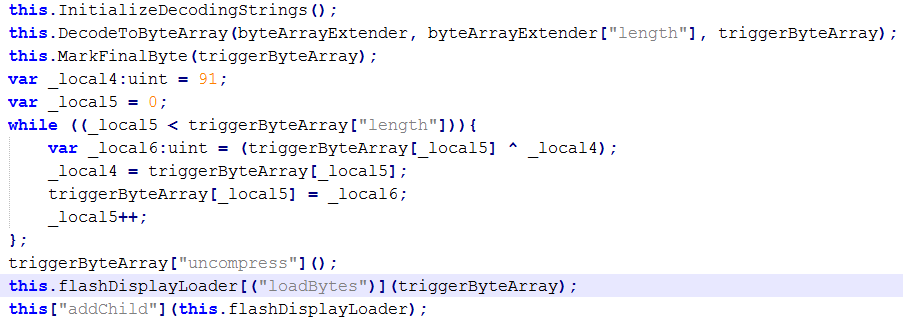
The embedded SWF is heavily obfuscated, but the code has much in common with the source code for Angler EK’s CVE-2015-0313 exploit.
The first thing to do is determine whether the exploit is indeed for CVE-2015-0359. Some researchers think that it’s not. The embedded SWF contains a function we named CheckEnvironment, which eventually does this: Continue reading "Understanding Flash Exploitation and the Alleged CVE-2015-0359 Exploit"


 Get updates from Unit 42
