

Threat actors constantly hunt for evasion and anti-analysis techniques in order to increase the success rate of their attacks and to lengthen the duration of their access on a compromised system. In some cases, threat groups use techniques they find discussed on the Internet during their operations, such as the Office Test Persistence method that the Sofacy group found within a blog published in 2014. While analyzing a recent attack that occurred on August 10, 2016, we observed an interesting anti-analysis technique used by the Dukes threat group (aka APT29, CozyBear, Office Monkeys) that we had not seen in the past. The use of the anti-analysis technique that we will discuss in this blog confirms that this threat group continually researches new anti-analysis techniques.
Pythons and Unicorns and Hancitor…Oh My! Decoding Binaries Through Emulation
This blog post is a continuation of my previous post, VB Dropper and Shellcode for Hancitor Reveal New Techniques Behind Uptick, where we analyzed a new Visual Basic (VB) macro dropper and the accompanying shellcode. In the last post, we left off with having successfully identified where the shellcode carved out and decoded a binary from the Microsoft Word document.
Often when analysts are faced with an embedded payload for which they want to write a decoder, they simply re-write the assembly algorithm in their language of choice and process the file. The complexity of these algorithms varies when attempting to translate from machine code to a higher-level language. It can be quite frustrating at times, depending on the amount of coffee you’ve had and complexity of the algorithms.
In this post, I’ll show how we can use an attacker’s own decoding algorithm combined with CPU emulation to decode or decrypt payloads fairly easily by simply reusing the assembly in front of us. Specifically, I’ll be focusing on using the Unicorn Engine module in Python to run the attacker’s decoding functions within an emulated environment to extract our encoded payloads. Our end goal is to identify the command and control (C2) servers being used by the final Hancitor payload by running our Python script against the Microsoft Word document. Continue reading "Pythons and Unicorns and Hancitor…Oh My! Decoding Binaries Through Emulation"
Exploring the Cybercrime Underground: Part 2 – The Forum Ecosystem
In this second part of Unit 42’s Cybercrime Underground blog series, we dive into the cybercrime forum ecosystem and focus on observed cybercriminal roles, as well as prevalent tools and services bought and sold in the underground. The goal of this post is not to provide an exhaustive directory, but rather to provide additional context on the operations and highly prevalent threats observed within this ecosystem. Continue reading "Exploring the Cybercrime Underground: Part 2 – The Forum Ecosystem"
LabyREnth Capture the Flag (CTF): Unix Track Solutions
Thanks to the incredibly talented community of threat researchers that participated in LabyREnth, the Unit 42 Capture the Flag (CTF) challenge. Now that the challenge is closed, we can finally reveal the solutions of each challenge track. We’ll be rolling out the solutions for one challenge track per week. Next up, the Unix track. Continue reading "LabyREnth Capture the Flag (CTF): Unix Track Solutions"
VB Dropper and Shellcode for Hancitor Reveal New Techniques Behind Uptick
The Hancitor downloader has been relatively quiet since a major campaign back in June 2016. But over the past week, while performing research using Palo Alto Networks AutoFocus, we noticed a large uptick in the delivery of the Hancitor malware family as they shifted away from H1N1 to distribute Pony and Vawtrak executables. In parallel, we received reports from other firms and security researchers seeing similar activity, which pushed us to look into this further.
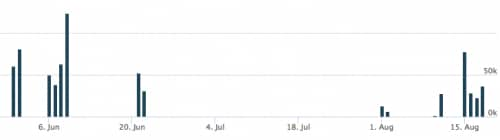
Figure 1 AutoFocus view of new sessions of Hancitor since July 2016
The delivery method for these documents remained consistent to other common malicious e-mail campaigns. Lures contained subjects related to recent invoices, or other matters requiring the victim’s attention, such as an overdue bill. These lures were expected, until we started digging into the actual documents attached and saw an interesting method within the Visual Basic (VB) macros in the attached documents used for dropping the malware.
This blog will review in detail the dropping technique, which isn’t technically new, but this was the first time we’ve seen it used in this way. The end goal is to identify where the binary was embedded, but we’ll cover the macro and the embedded shellcode throughout this post. Continue reading "VB Dropper and Shellcode for Hancitor Reveal New Techniques Behind Uptick"
Exploring the Cybercrime Underground: Part 1 – An Introduction
This post is the first in a series by Unit 42 covering the cybercrime underground. Cybercrime persists as an epidemic that continues to worsen every year, with associated impacts and losses steadily growing. In this series, we'll explore actors, motivations, and the current threat landscape.

Some of what contributes to the growth of the cybercrime underground is the convenience, speed, and anonymity the Internet provides to enable online crimes. Advances in the sophistication of cyberattacks over the past decade closely correlate with two major evolutions:
- Lowered Cost of Entry: The ease and availability of tools and training to conduct such attacks, allowing individuals with lower skillsets to successfully thrive in the cybercrime industry.
- Increased Business Acumen: The refinement of full attack lifecycle processes and support structures that rival some of the most innovative legitimate business models, enabling more efficient and effective operations coupled with robust commodity markets.
With the ever-changing cybercrime threat landscape, it is important to understand its current state, observe trends, and anticipate likely paths of evolution. Before we go any further, let’s establish some definitions related to the cybercrime underground.
Definitions
Cybercrime: Any crime that involves the use of computers to victimize an individual or organization for financial gain.
Indexed Web: All Internet search engine accessible and indexed sites. This is the web that most of the world knows and uses every day, and includes commercial / retail, social media, news, consumer service, and other publicly known sites.
Deep Web: Sites that make indexing by Internet search engines problematic, due to access control, dynamic content, or other prerequisite mechanisms (e.g., encryption or specialized software). In general, these sites are not accessible to standard web search engine crawlers that perform indexing. This class of sites is also sometimes referred to as the Invisible Web, Hidden Web, or Deepnet.
Dark Web: A subset of Deep Web sites that requires special software (e.g., TOR) to reach. Related infrastructure hosts criminal content such as stolen information and access to premium malware and exploits, and supports other categories of activity, such as illegal pornography, drug trade, prostitution, human trafficking, and terrorist operations. A number of these sites are transient, only up for a short time or constantly changing addresses in an attempt to minimize the risk of exposure to government agencies, law enforcement and security researchers.
Cybercrime underground: Online forums where information, tools (malware, exploits), and services are bought and sold in support of cybercrime objectives. Composite sites exist on the Indexed Web, Deep Web, and Dark Web in varying contexts.
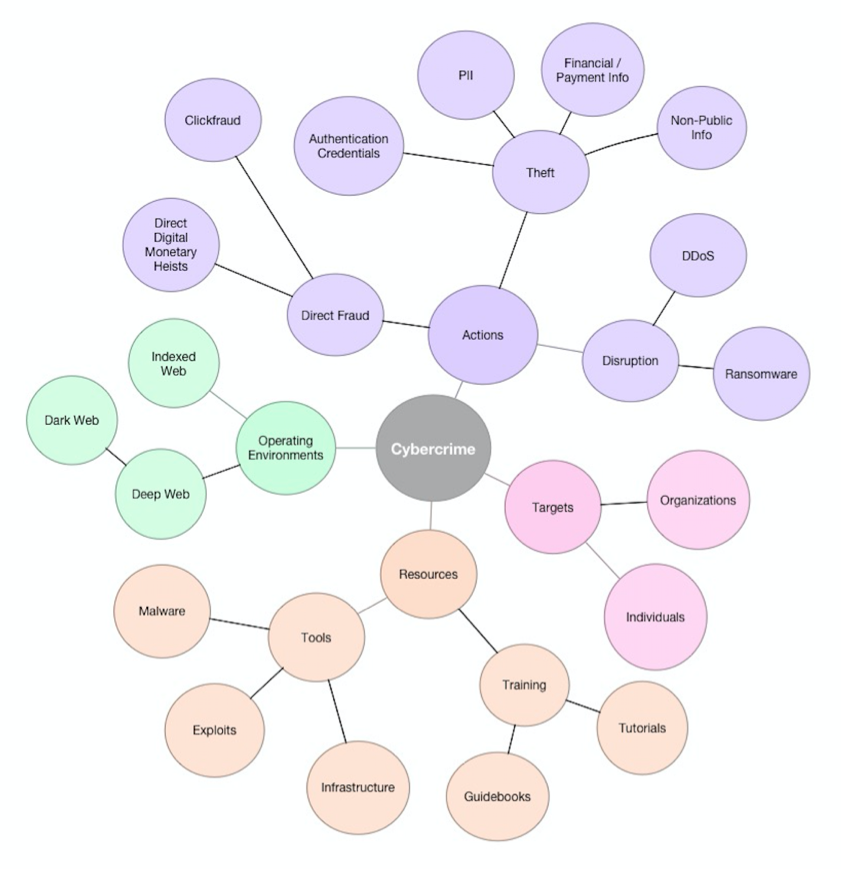
Figure 1 High level chart connecting the different attributes of cybercrime
Impacts
Cybercrime has broad impacts to both organizations and individuals. The losses from cybercrime can range from theft of intellectual property to costs incurred due to a result of a breach. A high level overview of the impacts can be broken down into direct and indirect losses:
Direct Losses
- Loss of control over owned or entrusted:
- PII data
- Financial information
- Electronic Health Records (EHRs)
- Intellectual property
- Trade secrets
- Direct financial fraud
- Service disruptions or restriction of access to data (e.g., ransomware).
Indirect Losses
- Costs supporting recovery from a breach, such as incident response, investigation services, and remediation
- Reputational damage
- Legal and regulatory penalties related to the loss of records (e.g., PII, health, financial, etc.)
- Near term business revenue loss
- Longer term financial and economic consequences
Products, Services and Actor Roles
The cybercrime underground maintains its own economy of commoditized products and services. Related financial transactions have boomed with the broad adoption and accessibility of anonymous cryptocurrencies such as Bitcoin, which is commonly used by malicious actors amongst themselves as well as for accepting payments from victims (e.g., ransomware).
Products can be broken down into two main categories: information and resources. Sellers of these products benefit from the quick payouts of discrete (and sometimes one-time) transactions. Buyers benefit from what is often a professional level product that can be applied immediately to malicious actor operations “out of the box.” Information products include commodities such as:
- Stolen personally identifiable information (PII): Including everything from mass email lists used by spammers to full identity theft packages to commit financial fraud
- Exfiltrated organizational information: Including intellectual capital / property, non-public internal data, and internal operational details
- Harvested authentication credentials: Stolen username and password combinations continue to present a significant risk these days, especially when those credentials are re-used across multiple sites
- Pilfered financial / payment data: Unauthorized withdrawals from accounts or charges against credit lines continue to plague account holders
Resource products include elements such as:
- Access to feature-rich malware: Malware across varying capabilities (e.g., information stealers, remote administration tools – RATs, ransomware, purpose built utilities) that demonstrate consistent results and avoid source code leakage can generate significant revenue for associated authors and distributors
- Purchase of system or software exploits: While many white hats elect to support bug bounty initiatives by vendors, there remains a lucrative underground market for reliable, un-patched exploits
- Transfer of control for previously compromised machines: This usually applies to always-on servers that can then be used as attack platforms or sold for the information they store, although the service model for this element is more popular these days
- Malicious actor training: Guidebooks or tutorials on effective tool usage or specific Tactics, Techniques, and Procedures (TTPs)
Services can be thought of as "lease" versions of the resource-based – and even some of the information-based – products described above, where access to a product is promised at a set rate for an agreed upon period of time. Providing services appeals to many actors due to the recurrent cost model and opportunity to collect higher profits over a longer period of service. Malicious actors using these services benefit from assurances on availability and performance (e.g., timely feature, exploitation, and evasion updates). Such services include the following:
- Distributed Denial of Service (DDoS): Botnet powered attacks that affect the availability of targeted servers and capabilities
- Exploit Kits (EKs): Typically, monthly rate for access to the exploit toolkit allowing for customized end payloads
- Infrastructure rental: Hosting services for attack platforms; malware update, configuration, and command and control (C2); and other attack lifecycle functions. Of special note: BulletProof Hosting Services (BPHSs) providers play a critical role in the cybercrime world as they allow cyber criminals to thrive and operate their malicious services without the risk of easily being taken down by law enforcement. Some of the key reasons that BPHS providers have been successful in their operations include: the appearance of legitimate businesses, strategic geographic distribution of servers in countries with accommodating cyber laws, high redundancy to minimize the risk of operational disruption, and professional level support services
- Money laundering: Transfer (“money muling”) of illegally obtained funds through accounts and mechanisms in money haven countries remains a key service
As a high-level, malicious actor motivation, cybercrime is simply an extension of traditional criminal activity, focused on the theft of personal and account information and/or establishment of leverage over a target to achieve illicit monetary gain. The cybercrime ecosystem relies on a number of key roles that are also shared across other top-level motivations. A description of these roles can be found in Part 2 of a prior Unit 42 blog series: Adversaries and Their Motivations.
Coming Up…
Subsequent posts in this blog series will focus on different aspects of the cybercrime underground, including associated tools, services, techniques, and actors.
Aveo Malware Family Targets Japanese Speaking Users
Palo Alto Networks has identified a malware family known as ‘Aveo’ that is being used to target Japanese speaking users. The ‘Aveo’ malware name comes from an embedded debug string within the binary file. The Aveo malware family has close ties to the previously discussed FormerFirstRAT malware family, which was also witnessed being used against Japanese targets. Aveo is disguised as a Microsoft Excel document, and drops a decoy document upon execution. The decoy document in question is related to a research initiative led by the Ido Laboratory at the Saitama Institute of Technology. Upon execution, the Aveo malware accepts a number of commands, allowing attackers to take full control over the victim machine. Continue reading "Aveo Malware Family Targets Japanese Speaking Users"
Unit 42 Researchers Recognized in MSRC Top 100 List
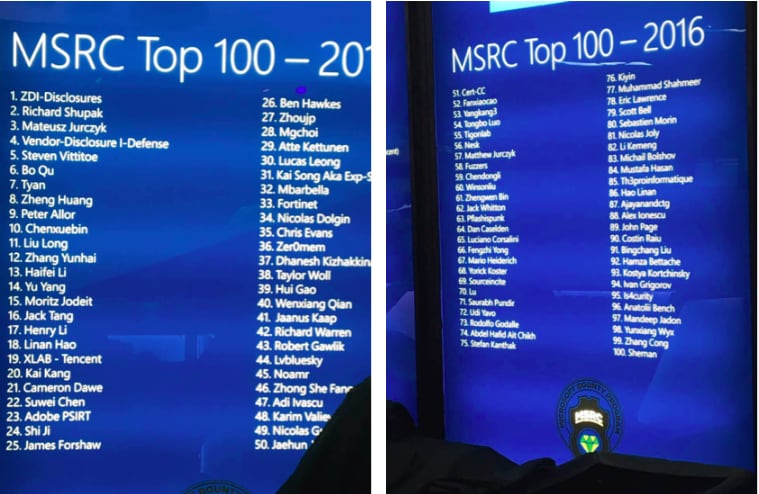
Four Palo Alto Networks threat intelligence researchers were recently recognized in the Microsoft Security Response Center (MSRC) Bounty Program Top 100 list announced at Black Hat USA 2016. Congratulations to Bo Qu, Tao Yan, Hui Gao, and Tongbo Luo!
 Continue reading "Unit 42 Researchers Recognized in MSRC Top 100 List"
Fresh Baked HOMEKit-made Cookles – With a DarkHotel Overlap
Threat actors tend to reuse certain tools, a trend we observed during recent Unit 42 research published on MNKit. In this post, we will discuss a fresh toolkit, which on the surface, appeared similar to MNKit, but functionally was found to be quite different.
This toolkit, which we named “HOMEKit”, is similar to MNKit in that it is also designed to generate weaponized Microsoft Word documents containing an exploit for CVE-2012-0158, but it uses OLE instead of MHTML files. In addition, we have been able to track the use of HOMEKit by its operators since 2013 across a variety of campaigns, using several different variants of the toolkit. For this post, we will be focusing on the most recent example of the HOMEKit toolkit, in addition to an interesting overlap we discovered with the well-known attack campaign DarkHotel. In a follow-up post, we will discuss the other campaigns associated with HOMEKit, along with other variants of HOMEKit that we discovered.
Continue reading "Fresh Baked HOMEKit-made Cookles – With a DarkHotel Overlap"
Orcus – Birth of an unusual plugin builder RAT
Unit 42 has been tracking a new Remote Access Trojan (RAT) being sold for $40 USD since April 2016, known as “Orcus”. Though Orcus has all the typical features of RAT malware, it allows users to build custom plugins and also has a modular architecture for better management and scalability. The objective of this blog is to highlight some of the capabilities of this new RAT family and the impact seen so far. Continue reading "Orcus – Birth of an unusual plugin builder RAT"
Afraidgate: Major Exploit Kit Campaign Switches from CryptXXX Ransomware Back to Locky
By mid-July 2016, the Afraidgate campaign stopped distributing CryptXXX ransomware. It is now distributing the ".zepto" variant of Locky. Afraidgate has been using Neutrino exploit kit (EK) to distribute malware after Angler EK disappeared in early June 2016. As we previously reported, this campaign continues to utilize gate domains using name servers from afraid.org. Continue reading "Afraidgate: Major Exploit Kit Campaign Switches from CryptXXX Ransomware Back to Locky"
SpyNote Android Trojan Builder Leaked
Our team recently discovered a new Android Trojan called SpyNote which facilitates remote spying. The builder, which creates new versions of the malware, recently leaked on several malware discussion forums. SpyNote is similar to OmniRat and DroidJack, which are RATs (remote administration tools) that allow malware owners to gain remote administrative control of an Android device.
Palo Alto Networks Researchers Discover Critical Safari 9.1 Vulnerability
Palo Alto Networks researchers were recently credited with the discovery of an Apple product vulnerability.
Researchers Tongbo Luo and Bo Qu discovered a WebKit vulnerability (CVE-2016-4589) affecting Safari in Apple iPhone 4s and later, iPod touch (5th generation) and later, iPad 2 and later, and Apple TV (4th generation).
Continue reading "Palo Alto Networks Researchers Discover Critical Safari 9.1 Vulnerability"
Attack Delivers ‘9002’ Trojan Through Google Drive
Unit 42 recently observed a 9002 Trojan delivered using a combination of shortened links and a shared file hosted on Google Drive. The delivery method also uses an actor-controlled server hosting a custom redirection script to track successful clicks by targeted email addresses. The infrastructure associated with this 9002 Trojan sample was also found to have previous ties to attacks on Myanmar and other Asian countries that used Poison Ivy as the payload, including a recent, and possibly ongoing campaign against Taiwan. Continue reading "Attack Delivers ‘9002’ Trojan Through Google Drive"
PowerWare Ransomware Spoofing Locky Malware Family
Unit 42 has recently discovered a new variant of PowerWare, also known as PoshCoder, imitating the popular Locky ransomware family. PoshCoder has been encrypting files with PowerShell since 2014, and the new variant named PowerWare was reported in March 2016. The malware is responsible for encrypting files on a victim’s machine and demanding a ransom via the Bitcoin cryptocurrency.
In addition to using the ‘.locky’ filename extension on encrypted files, this PowerWare variant also uses the same ransom note as the Locky malware family. This is not the first time PowerWare has imitated other malware families, as earlier versions have been known to use the CryptoWall ransom note. Other instances of ransomware have also been known to borrow code from others, such as the TeslaCrypt ransomware family. Continue reading "PowerWare Ransomware Spoofing Locky Malware Family"

 Get updates from Unit 42